
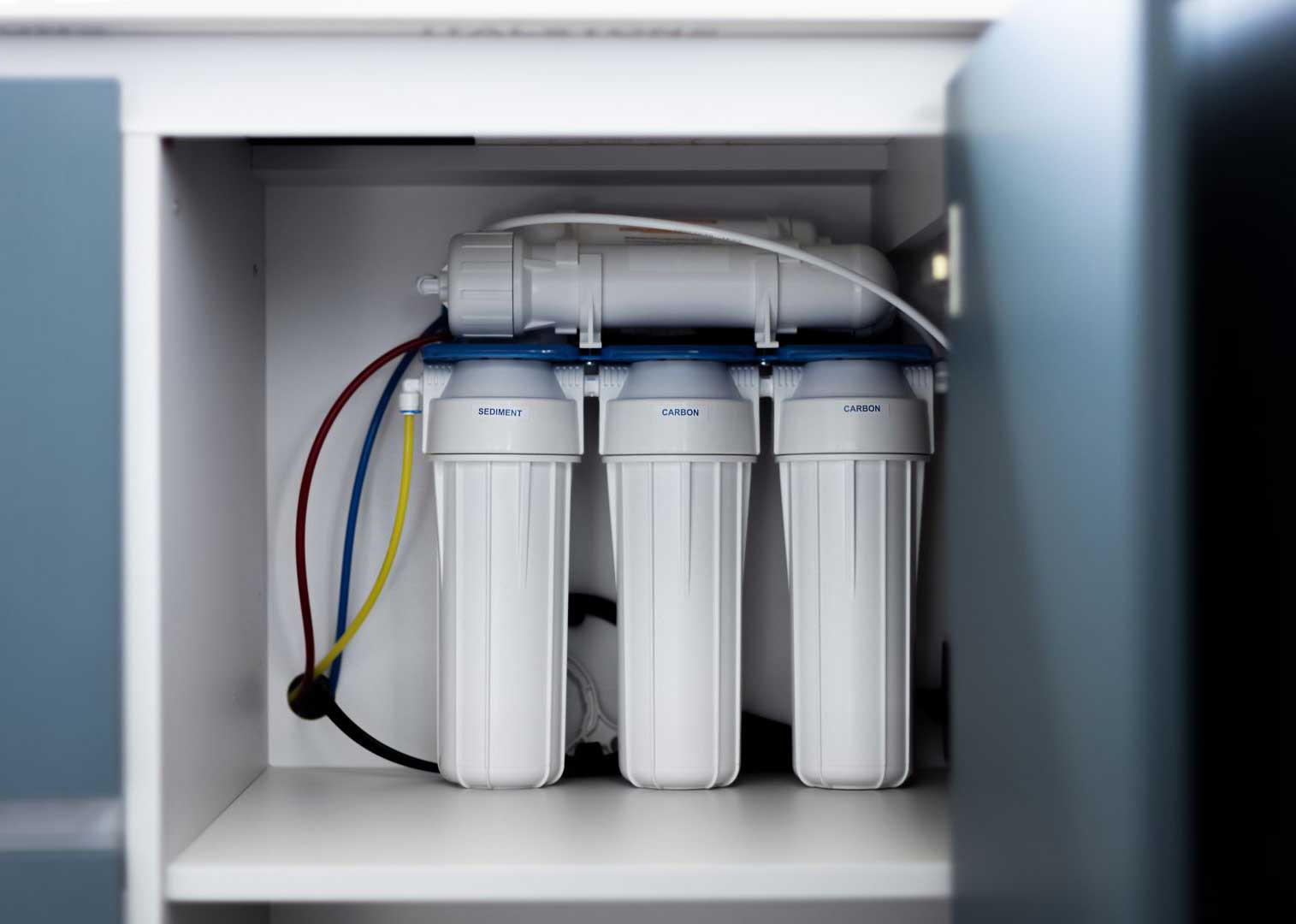
The right whole house water filtration system for your Fort Worth home depends on your water quality, your household size, and the specific contaminants you want to remove. Carbon filters excel at reducing chlorine and improving taste, reverse osmosis systems remove a wide range of contaminants, including heavy metals, and UV purification targets bacteria in well water. Because Fort Worth sits in a hard water region, many homeowners also pair filtration with a water softener to protect their plumbing. A quick water test is the best starting point for choosing the system that fits your home.
What Is a Whole House Water Filtration System?
A whole house water filtration system treats your water where it enters your home, so every faucet, shower, and appliance delivers cleaner, purified water. Filtering at that single point gives you consistent water quality throughout the house and real peace of mind.
These systems vary in both complexity and function. Some use sediment filters to trap larger particles, while others rely on advanced technologies like reverse osmosis or ultraviolet light for deeper purification.
Choosing the right system is not only about your water today. It is also about anticipating future needs, so it helps to consider your household size, your daily water usage, and the specific contaminants you want to eliminate.
Fort Worth homeowners face an added factor, since North Texas is well known for hard water. Along with cleaner water for drinking, cooking, and bathing, the right setup can reduce hard water buildup that quietly wears on your plumbing over time.
How Do Whole House Filters Improve Your Water Quality?
Whole house filters improve your water quality by removing contaminants like chlorine, heavy metals, and sediment from every tap in your home. That means cleaner, safer, better tasting water for your whole family.
By filtering out impurities, these systems improve both the taste and smell of your water while supporting your household’s health. They also reduce the risk of plumbing problems caused by buildup and corrosion from harmful substances.
Fewer deposits inside your pipes can mean fewer repairs and a longer life for your plumbing and appliances. In older Fort Worth neighborhoods where the plumbing has seen decades of hard water, that protection matters, and severely scaled pipes may eventually need a full home repipe to restore reliable flow.
Many homeowners also notice softer water that is gentler on skin and hair, which makes everyday routines more pleasant. Ultimately, a whole house system gives you the comfort of knowing your family is using water that is free of unwanted pollutants.
What Features Matter Most in a Water Filtration System?
The features that matter most are the filtration method, the system’s capacity, ease of maintenance, third-party certifications, and the warranty. Focusing on these five points turns an overwhelming decision into a clear one.
First, consider the filtration method. Carbon filters, reverse osmosis, and UV systems each have unique strengths, so the right choice depends on your specific water concerns.
Next, look at capacity, since you want a system that handles your household’s water usage without losing performance. Ease of maintenance matters too, because a system that is simple to service and has readily available parts saves you time and hassle.
Check for certifications such as NSF and ANSI standards, which confirm the system meets recognized safety and efficiency benchmarks. Finally, review the warranty, since a strong warranty reflects the manufacturer’s confidence, and occasional professional checks that catch hidden plumbing problems help keep the whole setup running smoothly.
How Do the Top Water Filtration Systems Compare?
The top whole house options are carbon filters, reverse osmosis systems, and UV purification systems, and the best fit depends on your water source and quality. Comparing them side by side makes the decision much clearer.
- Carbon Filters: These remove chlorine and improve taste, which makes your water fresher, and they are a great match for homes on municipal water.
- Reverse Osmosis Systems: Ideal for thorough filtration, these systems remove a wide range of contaminants, including heavy metals and bacteria. They can cost more, but they offer robust protection.
- UV Purification Systems: Using ultraviolet light, these systems kill bacteria and viruses, which makes them well suited to homes on well water.
For many Fort Worth homes, the best results come from combining a filtration system with softening, since a quality whole home water softener handles the hard minerals that filters alone leave behind.
How Do You Choose the Right System for Your Home?
You choose the right system by testing your water, matching the filtration to your specific concerns, and sizing the unit to your household’s needs. A methodical approach leads to a confident decision.
Start by assessing your water quality with a water test, which identifies the contaminants you are actually dealing with. From there, evaluate each system’s filtration capabilities and focus on the ones that address your primary concerns, whether that is chlorine, sediment, or hardness.
Think about your home’s size and water usage next, and choose a system that comfortably handles your daily demand. Consider maintenance requirements too, since some systems need more upkeep than others.
Finally, look at reviews and expert recommendations for insight into reliability and real world performance. An experienced local plumber can walk you through the options and recommend the system that truly fits your home.
Cleaner Water for Your Fort Worth Home
Investing in a whole house water filtration system is one of the simplest ways to protect your family’s health and your home’s plumbing. With the right choice, you enjoy clean, refreshing water at every tap and added peace of mind for years to come.
Choosing the best system does not have to be complicated. When you are ready for expert guidance tailored to Fort Worth water, request a free estimate and let us help you enjoy cleaner water at home.
Frequently Asked Questions
Do I need a water filtration system in Fort Worth, TX?
Many Fort Worth homeowners benefit from whole house filtration because North Texas water is hard and often treated with chlorine. A system tailored to your water can improve taste, protect your plumbing, and give you cleaner water at every tap. The best way to know what you need is to start with a simple water test.
What is the difference between a water filter and a water softener?
A water filter removes contaminants like chlorine, sediment, and heavy metals, while a water softener specifically removes the hard minerals that cause scale and buildup. In a hard water area like Fort Worth, many homes benefit from using both together. A local plumber can help you decide whether filtration, softening, or a combination is right for your home.
How often does a whole house water filter need maintenance?
Most whole house filters need periodic filter changes and occasional servicing, with the exact schedule depending on the system type and your water usage. Some cartridges last several months, while other media beds last for years. Choosing a system with readily available parts and a clear maintenance plan keeps upkeep simple.
Will a filtration system help with hard water in older Fort Worth homes?
A filtration system improves water quality, but hard water specifically is best handled by adding a water softener, which is especially valuable in older Fort Worth neighborhoods with aging pipes. Together, the two protect your plumbing from scale and extend the life of your fixtures and appliances. A professional can assess your water and recommend the right combination.